Discover how you're naturally wired to make an IMPACT.
Every leader has a unique way of creating value. Some naturally generate ideas. Others bring wisdom, inspire people, create stability, explain complexity, or make sure things actually get done. Your IMPACT Profile identifies the leadership energy you naturally bring so you can work from your strengths instead of constantly fighting against them. The more you understand your own energy, the easier it becomes to build healthier teams, stronger relationships, and more sustainable leadership.
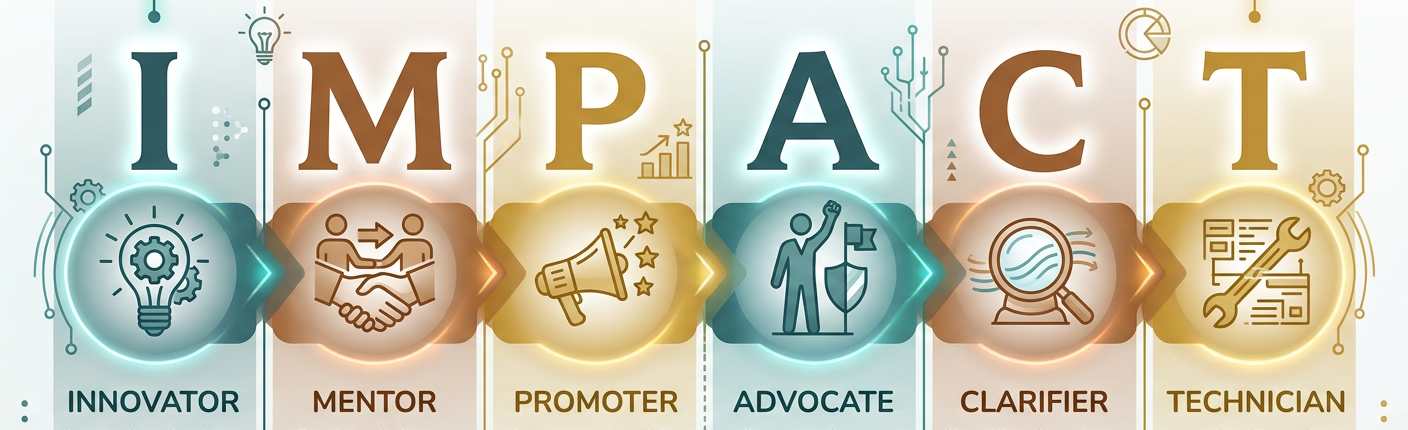
INNOVATOR
Innovators are visionaries and builders. They naturally see what could happen and take action to make it happen: new opportunities, ministries, or ideas. Their strength is bringing different people, resources, and ideas together to start something that creates growth and impact. Innovators love progress, starting new things, and watching projects come to life, but they can get frustrated with routines, too many rules, or slow results. They may struggle with details or processes that feel limiting, and they need freedom and trust to use their gifts well.
MENTOR
Mentors are tuned to truth, integrity, and strategic alignment. They have a natural ability to perceive patterns, call out misalignment, and provide guidance on direction. Their strength is discernment: they know when an initiative will succeed or fail and can see unseen risks or opportunities. Frustration arises when others ignore their warnings, act impulsively, or resist guidance. Mentors often struggle with impatience toward inefficiency and can become discouraged if their insights are undervalued. They thrive when given authority to advise, correct, and influence strategy.
PROMOTER
Promoters excel at rallying people, inspiring action, and bringing ideas to life through others. They naturally generate enthusiasm, communicate vision persuasively, and create momentum around projects. Their strength is engagement: they see potential in people and opportunities and mobilize resources effectively. They are frustrated by stagnation, resistance, or environments where energy is stifled. Promoters struggle when their efforts are constrained by bureaucracy or when results are slow. They thrive when allowed to lead outreach, inspire teams, and cultivate relationships that amplify impact
ADVOCATE
Advocates are people-oriented and excel at caring for, developing, and supporting others. Their strength is relational awareness: they notice emotional needs, build trust, foster loyalty, and help create healthy, connected environments. They are frustrated when people feel overlooked, relationships are neglected, or decisions prioritize results at the expense of people. Advocates often struggle with conflict, setting boundaries, or making decisions that may disappoint others. They thrive in roles where coaching, mentoring, team development, and cultivating a strong culture are key responsibilities.
CLARIFIER
Clarifiers are detail-oriented and excel at understanding, interpreting, and explaining complex systems or concepts. Their strength is clarity: they can make abstract principles practical, create learning pathways, and ensure that others understand the “why” behind strategy or processes. They are frustrated when others fail to grasp ideas or when work is rushed without understanding. Clarifiers often struggle with people who resist learning or shortcuts that bypass foundational understanding. They thrive in roles where training, communication, or systems-building are key responsibilities.
TECHNICIAN
Technicians are action-oriented and excel at turning plans, ideas, and vision into completed results. Their strength is execution: they bring order to tasks, follow through on commitments, and ensure that important work gets done consistently and effectively. They are frustrated by unclear expectations, constantly changing priorities, or leaders who fail to communicate direction. Technicians often struggle with ambiguity or being asked to take ownership without the authority to make decisions. They thrive in roles where organization, accountability, and implementation are key responsibilities.
What's Next?
Self-awareness is where self-leadership begins, but it isn’t where it ends.
Knowing your IMPACT type can help you understand why you communicate, respond, and approach problems the way you do.
But what happens when someone else’s wiring clashes with yours?
That’s where tension starts.
You may think they’re difficult. They may think you’re controlling. You may both walk away frustrated, misunderstood, or wondering why such a simple conversation became so complicated.
Understanding your wiring gives you awareness. Learning how to navigate differences gives you confidence.
That’s what the Conflict Confidence Workshop is about: turning self-awareness into better conversations, so you can understand what’s happening, address tension without making it worse, and handle difficult conversations with greater clarity and confidence.

Ready to Handle Conflict With More Confidence?
Join the 3-Day Conflict Confidence Workshop and learn how to:
• Understand how your wiring shapes the way you communicate and respond
• Stay calm when conversations get tense instead of reacting on autopilot
• Recognize when “difficult” might simply mean “different”
• See the situation from their perspective before assuming intent
• Know what needs to be said and walk into hard conversations with a plan
Because knowing your leadership style is a great starting point.
But knowing how to navigate the tension between different people, perspectives, and personalities is what builds conflict confidence.
Join The Workshop